

As Israel races toward its first national elections since 2022, the underrepresentation of women in government — and the consequences this has for not just women and girls, but for democracy — are critical issues. The Hadassah Foundation’s Israel-based grant recipients have worked relentlessly to ensure the needs and perspectives of women stay on the public’s radar. They’ve been advocating for gender equality since well before the elections, and they will continue to do so long after every vote is counted so that women can be fairly represented all decision-making tables and Israelis of all genders, religions and ethnicities have the opportunity to thrive.
Below is a sampling of recent articles by and about our inspiring Israeli grant recipients, followed by more general coverage of women and feminism in Israel, including the obituary of a pioneering female Israeli chemist. Learn about our newest cohort of Israeli grant recipients and meet all our grant recipients in both Israel and the United States. And whether you are in Israel (where national elections are October 27) or the United States (where the midterm elections are November 3),we hope you will exercise your right to vote in the coming weeks.
Israeli Grantees in the Headlines
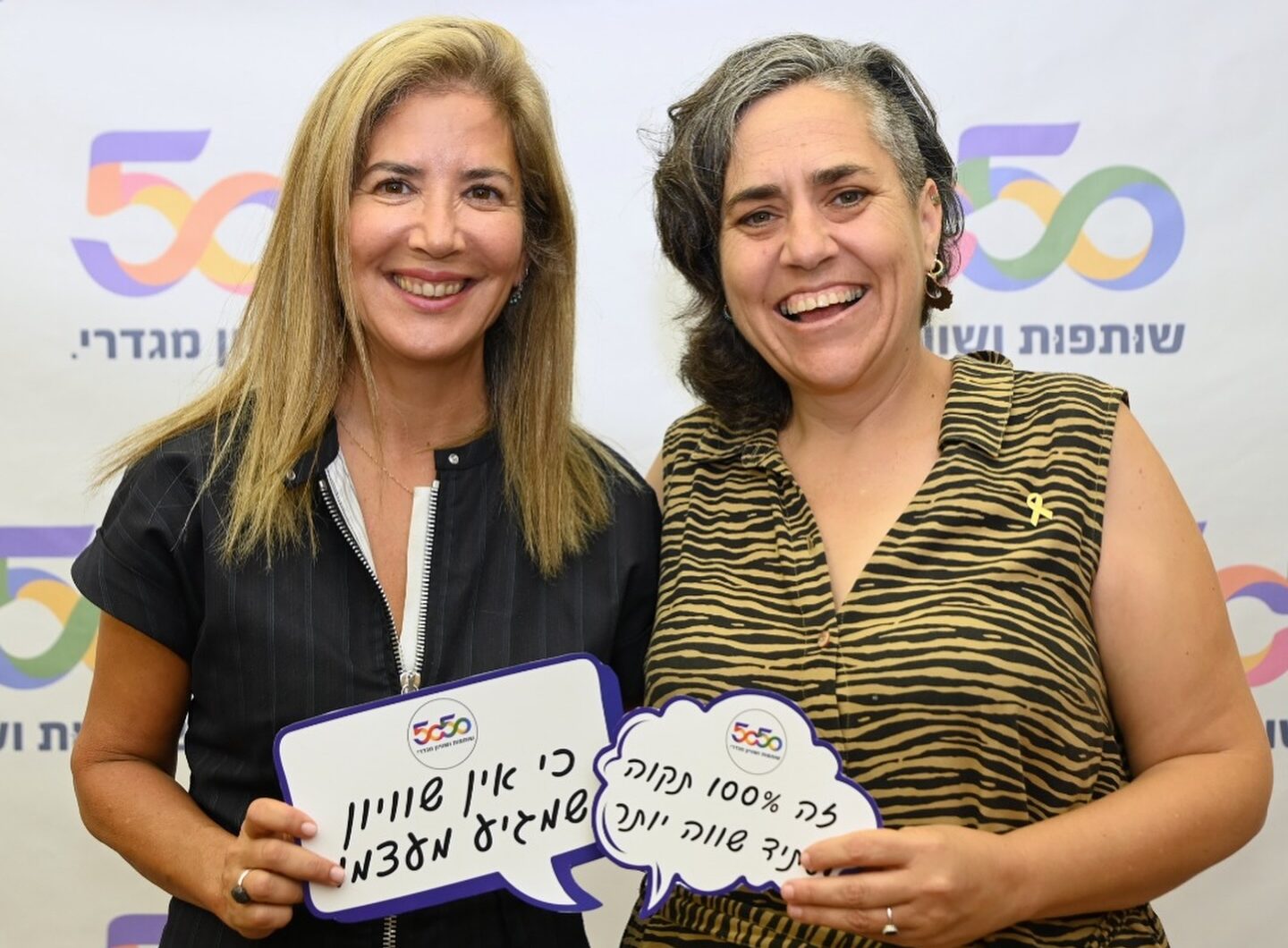
Yael Yechieli (right) with Naama Halevi-Peer, Head of the Department for Social Banking at Bank Hapoalim (Liat Mendel for the 50-50 Initiative)
Four Years of Eroding Women’s Rights in Israel. Can the Election Reverse the Trend?
Haaretz, September 22
Describes how the 50-50 Initiative‘s pressure campaign pushed five political parties to run slates in which, as 50-50 Founding CEO Yael Yechieli explains, “the gender ratio is balanced or almost balanced, something that has never happened in Israel.” At the same time, Israel’s right-wing, Orthodox, and Arab parties have ignored the call to include women. “Countries with 50 percent, or close to it, of women in leadership are countries that fight corruption more,” Yechieli notes, describing a documented link between gender equality and democratic health. “Naturally, human diversity reduces the possibility of deals being made behind the scenes and leads to more questions being asked and more internal scrutiny.”
Three Women, Three Worlds: Secular, Haredi and Bedouin Women Unite for Political Parity
Ynet, August 25
In addition to featuring Yael Yechieli, this article profiles two other 50-50 Initiative activists: Fany Sukenik, who is Haredi, and Hanan Alsaneh, who is an Arab citizen of Israel and co-director of Itach Ma’aki: Women Lawyers for Social Justice, another Hadassah Foundation grantee. Fany Sukenik calls on people to “understand that this is not a struggle belonging to ‘other women.’ The lack of representation of Haredi women is not our private problem. The exclusion of women never stays confined to one sector. We do not have to agree on everything in order to fight together for the right of all of us to be in the room where decisions are made.”
Women are Ready to Lead. Are Israelis Ready to Follow?
Times of Israel, August 24
Gali Zinger, the acting CEO of Israel Women’s Network, applauds the increased role of women in key political parties while emphasizing that equal representation is just the first step. “We need our representatives to fight for the issues that matter to women, such as equal pay, protection of women, an end to gender-based violence and sexual assault, and opportunities for women’s diverse perspectives, experience, and knowledge to impact policy.”
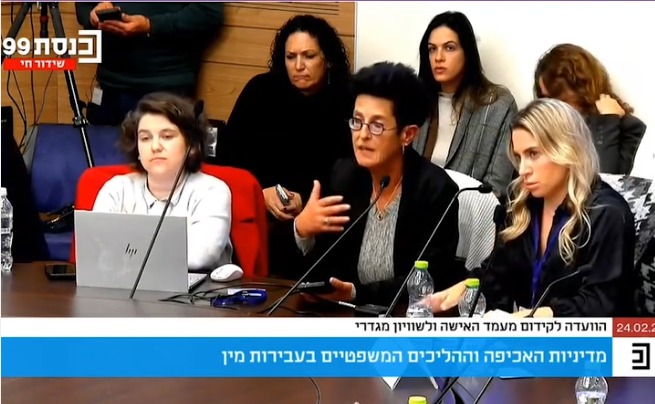
Orit Sulitzeanu (center) speaks at the Knesset in 2025. (Courtesy of ARCCI)
When the Law Fails to Understand Trauma, It Fails Justice
Jerusalem Post, July 15
Orit Sulitzeanu, the executive director of the Association of Rape Crisis Centers in Israel, celebrates passage of a law extending the statute of limitations in sexual abuse cases, allowing survivors more time to seek justice. But she emphasizes that ARCCI will continue fighting until the statute of limitations is eliminated altogether. “Statutes of limitations in sexual offense cases create a profound moral, legal, and philosophical injustice,” she explains. “They punish those who have suffered the greatest harm. The deeper the trauma, the less likely a survivor is to report the crime within the legal deadline. In effect, the law penalizes survivors precisely because the abuse was so devastating that it prevented them from speaking.”
Articles about Gender Equality in Israel
The Sexual Harassment Allegations That Could Mark a Turning Point for Arab Society in Israel
Haaretz, September 5
This in-depth article highlights the key role Arab feminist organizations (including past Hadassah Foundation grant recipient Women Against Violence) have played in advocating for Arab women who experience sexual harassment and other abuses — particularly amid controversy about a high-ranking Arab politician facing numerous credible harassment allegations. “The barrier for an Arab woman to file a police complaint is twofold: both as an Arab and as a victim of a sexual offense. She suffers from double oppression,” says Meisa Irshaid, an attorney and feminist activist, noting that in the absence of state institutions that Arab women can trust to protect them, “civil society and women’s rights organizations have been forced to fill the void.”
Making Room for Haredim, Army Struggles To Not Impinge on Others’ Space
Times of Israel, September 1
Explores a challenge that our grantee Israel Women’s Network has been raising the alarm about for years: the growing presence of gender segregation — and with it, threats to women’s careers — as the IDF seeks to integrate Haredi soldiers and accommodate their religious demands.
Ada Yonath, Chemist and First Israeli Woman to Receive a Nobel, Dies at 87
New York Times, September 1
Recognizes a pioneering female scientist “whose ingenuity and tenacity helped unlock the inner workings of the ribosome — the microscopic factory inside every living cell that builds the proteins necessary for life.” The article notes that Ada Yonath stubbornly persisted despite skepticism and discouragement from her colleagues. It also describes how her commitment to pursuing an education and career was shaped and inspired by the childhood experience of watching her mother struggle in a low-paid profession and seem helpless. “This really stuck with me,” Yonath said in a 2014 interview. “Knowledge and understanding and skills of this nature became important for me.”